The financial benefits of the Two Councils model
As part of the government’s consultation on Local Government Reorganisation they are asking the question ‘To what extent do you agree or disagree that this proposal will put local government in the area as a whole on a firmer footing’ particularly in relation to West Berkshire Council, who feature as part of two of the three proposals for the area.
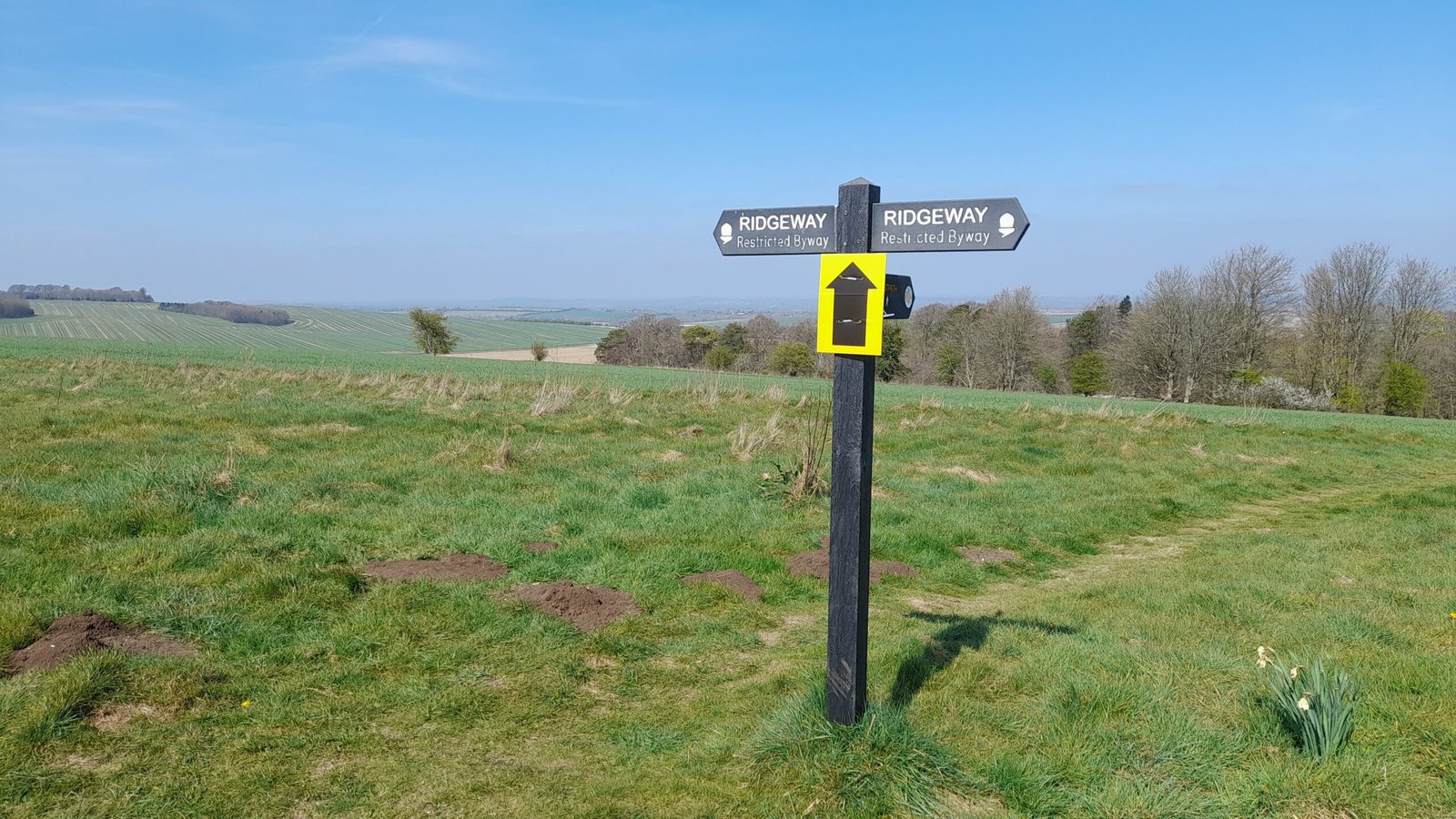
In both the two-unitary and three-unitary proposals, West Berkshire is proposed to form part of a new council with Vale of White Horse and South Oxfordshire Councils called ‘Ridgeway Council’.
Cllr Bethia Thomas, Leader of Vale of White Horse District Council, said: “Discussions about creating unitary councils in Oxfordshire have taken place many times in the past and my understanding is that the same conclusion was reached each time: Oxfordshire is much too big to be a unitary council on its own, but too small to divide into two – you’d be left with two unitary councils that are too small to be financially resilient. Partnering with our friends in West Berkshire solves that problem – it means you can create two councils that are exactly the right size.
“But more than that, West Berkshire and the south of Oxfordshire share so much in common. We are rural areas with similar communities and needs. Many in southern Oxfordshire remember being a part of Berkshire. It just made sense that we looked at a new council that can focus on delivering the services local people need.”
West Berkshire has been in receipt of ‘Exceptional Financial Support’ from the government in recent years. This means government has provided the facility for the Council to borrow funds to help address the budget shortfall.
Cllr Jeff Brooks, Leader of West Berkshire Council, said: “Our challenge is that our funding from central government has been significantly reduced, meaning that over the next three years, we will receive about £28 million less than expected. That is money that we need to pay for vital services for our residents. This is a challenge upper tier councils are facing across the country, with the Local Government Association announcing that nearly half of upper tier councils will require Exceptional Financial Support from government over the next 3 years. West Berkshire Council is well managed and performs well in the services that it delivers to support our communities.
“Joining a new Ridgeway Council solves the financial challenge because we would collectively be the right population size to be financially secure and also build on the good work of both areas to deliver even better services.”
As part of the two unitary proposal, independent financial analysis has been carried out. It shows significant savings of around £60m per year can be made and that the two unitary proposal is the most financially secure of the three models for Oxfordshire and West Berkshire.
The analysis by independent consultants also shows that the payback period and cost of transition between the single and two unitary proposals are negligible with the single unitary proposed to pay back in 2.7 years and the two unitary in 3.2 years.
Cllr Maggie Filipova-Rivers, Leader of South Oxfordshire, said: “Joining with West Berkshire carries minimal risk for Oxfordshire – not only that, it brings many benefits. West Berkshire has a proven record of delivering essential services. Their roads are measured as Green on the government’s local highways maintenance ratings, and their Adults and Children’s Services are rated ‘good’ by the Care Quality Commission and Ofsted. They also have a stronger economy than Oxfordshire and joining up will help benefit both areas.
“Their Adult Social Care and Children’s Services are also delivered far more efficiently than in Oxfordshire where per person costs are 20 – 30% above the national average.
“Together we can build, transform and develop even higher-performing service and infrastructure delivery for our communities.”
One of the other concerns in the Local Government Reorganisation process is ‘disaggregation’ where council services are split down into new councils.
In the two unitary proposal much of the risk of disaggregation is removed because there would already be two sets of the services before any change. This means some delivery would move but the new councils would not need to hire new management teams and would avoid other costs associated with splitting services.
Councillor Andy Graham, Leader of West Oxfordshire District Council, said: “Much has been made of the risk of disaggregation. In the two unitary proposal we argue that not only is the risk low, but we actually need to split the Oxfordshire services so they can be reshaped and work more efficiently. This will be of significant benefit to residents.
“In Oxfordshire the services are currently expensive and we believe they need to be improved. Scale isn’t necessarily better for efficiency in social care and this is proved by national statistics showing smaller councils deliver better and cheaper services.”
Councillor David Hingley, Leader of Cherwell District Council, added: “The inclusion of West Berkshire makes our two-council proposal all the more viable for Oxfordshire, helping us establish a new, ambitious Oxford and Shires Council that is the right size, financially resilient, and able to provide genuine local representation for the communities we serve in Cherwell.
“It keeps Oxford City, Cherwell and West Oxfordshire connected in a way that reflects daily life, enabling co-ordinated services for residents across our combined area. This is why our two-unitary model is the best fit for Oxfordshire’s future, providing the necessary stability and supporting all our places to thrive, be they village, city or town.”
Aside from the financial benefits, the two-unitary model offers clear benefits of the two-unitary proposal put it ahead of the other options:
- Delivering better services: The proposal responds to what residents, businesses and public sector partners say needs improving, from highways and social care to planning.
- Boosting both rural and urban economies: Drives fast-paced, sustainable growth across Oxford, market towns and rural areas, creating more jobs, better transport and the right homes in the right places.
- Creates councils more responsive to their communities: Keeps councils close to all local communities and tailored to their specific needs, ensuring strong local accountability and representation.
The government is currently consulting on the three proposals for Local Government Reorganisation in Oxfordshire. Residents, businesses and other organisations can complete the online survey of write to the government with their views. More information on the two unitary proposal and consultation can be found at www.twocouncils.org



latest video

news via inbox
Nulla turp dis cursus. Integer liberos euismod pretium faucibua